


11 Window Styles (With Pictures): Types, Pros, Cons & Cost
 13 minutes
 August 7, 2024
 Choosing the right window for your home involves more than picking something that looks good. The window styles you select affect how much light each room gets, how well the space ventilates, how easy the window is to clean, and how much you pay per unit. With 11 styles available for most residential projects, it helps to see them side by side before making any decisions. If you are ready to move past the research phase, explore what a full window upgrade looks like for your specific home.
Here is what this guide covers:
- All 11 window styles with pros, cons, and cost ranges
- A comparison table across ventilation, energy efficiency, and cost
- A how-to-choose section by room, light, budget, and architectural style
- FAQs on the most popular, most efficient, and most affordable styles
Why Window Style Is One of the Most Consequential Choices in a Replacement Project

Most homeowners treat window style as an aesthetic decision and prioritize it last. In practice, style determines function. A fixed picture window cannot ventilate a kitchen. A casement window on a narrow walkway becomes a hazard when open. A hopper in a basement is a practical egress and light solution that a double-hung is not.
Getting the style right the first time matters because replacement windows are a 20-plus year investment. The sections below cover every major residential window style with the information that is actually useful for making that decision: what the window does well, where it falls short, and what it typically costs installed.
11 Window Styles Explained: Pros, Cons & Cost
Each style below includes a recommended use case, pros, cons, and a typical installed cost range. Cost figures reflect standard vinyl replacement windows. Wood, fiberglass, or premium series windows will run higher within each category.
1. Double-Hung Windows
Double-hung windows feature two sashes, both of which slide up and down independently. Either sash can be opened at any position, and most modern versions tilt inward for easy interior cleaning. They are the most widely installed residential window style in the country.
Best for: Living rooms, bedrooms, and any room in a traditional or classic home
Pros:
- Both sashes open for flexible ventilation control
- Tilt-in sashes allow interior cleaning without going outside
- Compatible with virtually every architectural style
- Widely available with the most competitive pricing
Cons:
- Not the most airtight window when closed, as the sliding mechanism does not compress like a casement
- The multiple moving parts require more maintenance over time than fixed styles
Typical installed cost: $350 to $850 per window both traditional and modern homes. Their clean lines offer a contemporary look that can enhance the overall aesthetic of your home.
2. Single-Hung Windows
Single-hung windows look identical to double-hung windows from the outside but only the lower sash moves. The upper sash is fixed in place. They are a cost-effective alternative where full ventilation control is not required.
Best for: Bedrooms, secondary rooms, and budget-conscious whole-home replacements
Pros:
- Less expensive than double-hung
- Fewer moving parts mean less maintenance
- Same clean look as double-hung from the exterior
Cons:
- Only the bottom sash opens, limiting ventilation
- Harder to clean the exterior of the upper fixed sash
- Not suitable for rooms where upper-sash ventilation matters
Typical installed cost: $200 to $700 per window
3. Casement Windows
Casement windows are hinged on one side and swing outward like a door, operated by a crank mechanism at the base. When fully open, the entire sash area is unobstructed, making them one of the best-ventilating styles available. The compression seal created when the window closes also makes them among the most airtight options in the residential market.
Best for: Living rooms, bedrooms, rooms facing prevailing winds, and any home where energy efficiency is the priority
Pros:
- Maximum ventilation with fully open sash
- Compression seal provides superior airtightness when closed
- Unobstructed views with no horizontal rail dividing the glass
- Strong energy efficiency performance
Cons:
- Crank mechanism adds a wear point that can fail over time
- Outward swing requires exterior clearance, making them impractical over walkways, patios, or driveways
- Harder to install window air conditioners
Typical installed cost: $400 to $900 per window
4. Awning Windows
Awning windows are hinged at the top and open outward from the bottom, creating an awning-like overhang. This design allows them to remain open during light rain since the glass itself deflects water away from the opening. They are commonly paired with fixed or picture windows to add ventilation to larger openings.
Best for: Bathrooms, kitchens, basements, and high-on-the-wall placements where privacy and ventilation are both needed
Pros:
- Can remain open during light rain
- Ideal for high-wall placement where other styles would be impractical
- Good compression seal for energy efficiency
- Works well paired with fixed windows in combination configurations
Cons:
- Limited glass area compared to other operable styles
- Outward opening requires exterior clearance
- Not suitable as egress windows in most cases
Typical installed cost: $400 to $850 per window
5. Picture Windows (Fixed Windows)
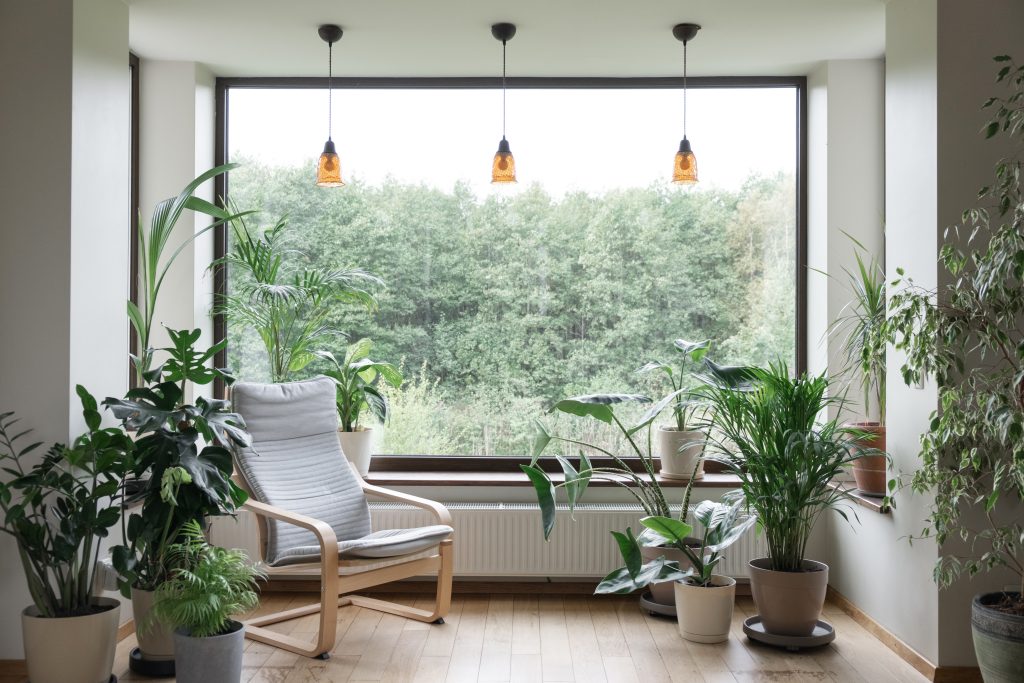
Picture windows are large, fixed panes of glass that do not open. They are designed purely to maximize light and views, and because there are no moving parts, they tend to be among the most energy-efficient and cost-effective options per square foot of glass.
Best for: Living rooms, great rooms, and any space where a view is the priority and ventilation can be handled by other windows or the HVAC system
Pros:
- Maximum unobstructed view and natural light
- Highly energy efficient due to no operable seals to degrade
- Lower cost per square foot than operable styles
- Low maintenance with no moving hardware
Cons:
- No ventilation whatsoever
- Cannot be used as egress windows
- Exterior cleaning requires going outside
Typical installed cost: $300 to $800 per window
6. Sliding Windows
Sliding windows operate on a horizontal track, with one or both sashes gliding side to side. They suit wide, low openings where a vertical-style window would not fit and work well in modern or contemporary homes where a clean horizontal line is part of the aesthetic.
Best for: Wide openings, basements, garages, and modern or contemporary home styles
Pros:
- No outward opening required, making them practical over walkways or tight exterior spaces
- Easy to operate with no crank mechanism
- Available in large sizes for wide horizontal openings
- Lower cost than most operable styles
Cons:
- Horizontal sliding seal is less airtight than a compression-style window
- Not suitable for tall, narrow openings
- One sash is typically fixed, limiting ventilation area
Typical installed cost: $350 to $900 per window
7. Bay Windows
Bay windows project outward from the exterior wall in a three-panel configuration, typically with a central fixed panel flanked by two operable side panels angled at 30 or 45 degrees. They create a small alcove of additional interior space and add strong architectural character to the exterior.
Best for: Living rooms, dining rooms, and front-facing walls where curb appeal and interior space are both priorities
Pros:
- Creates usable interior alcove space, often used for seating
- Strong curb appeal and architectural presence
- Combination of fixed and operable panels provides both views and ventilation
- Can significantly increase natural light in a room
Cons:
- Most expensive standard window category due to structural framing requirements
- Installation complexity requires professional expertise
- The roof section above the projection requires periodic maintenance
- Not suitable for walls with limited exterior clearance
Typical installed cost: $1,500 to $6,000+ depending on size and configuration
8. Bow Windows
Bow windows are similar to bay windows but use four or more equal-sized panels arranged in a gentle curve rather than the angled three-panel bay configuration. The curved profile creates a more elegant, rounded appearance and a larger interior alcove than a comparable bay window.
Best for: Traditional, Victorian, and craftsman-style homes where the curved profile complements the architecture
Pros:
- Elegant, distinctive exterior appearance
- Larger interior alcove than bay windows of similar width
- Panoramic view from the curved glass array
- Strong natural light from multiple angles
Cons:
- Most expensive window style due to custom framing and installation complexity
- The curved roof section above requires regular inspection and maintenance
- Not suited to modern or contemporary architectural styles
- Requires professional installation
Typical installed cost: $2,500 to $9,000+ depending on size and panel count
9. Hopper Windows
Hopper windows are the inverse of awning windows. They are hinged at the bottom and open inward from the top, tilting into the room. They are most common in basements and bathrooms because they make practical use of compact, high-on-the-wall openings while providing ventilation and some natural light.
Best for: Basements, bathrooms, and utility rooms where wall space is limited
Pros:
- Seal tightly against the frame when closed for good insulation
- Efficient use of small, high-wall spaces
- Low cost compared to most other styles
- Easy to operate
Cons:
- Open inward, which limits placement near furniture or fixtures
- Not usable as egress windows in most configurations
- Small size limits the light and view they provide
Typical installed cost: $200 to $600 per window
10. Garden Windows
Garden windows project outward from the wall in a box-like configuration with a glass top, glass sides, and built-in shelves. They function like a small greenhouse attached to the home and are most popular in kitchens where the south-facing light supports herb or plant growing.
Best for: Kitchens, breakfast nooks, and any south-facing wall where indoor plants or a unique design element is the goal
Pros:
- Unique architectural feature that adds character
- Built-in shelves for plants, herbs, or display
- Brings light in from three sides plus the top
- Creates a visually distinct focal point in a kitchen
Cons:
- More expensive than standard operable windows
- The protruding structure collects debris and requires regular cleaning
- Glass top can cause heat gain in summer
- Complex installation compared to standard replacement styles
Typical installed cost: $1,000 to $4,000 depending on size and material
11. Skylights
Skylights are installed in the roof plane rather than the wall, bringing in natural light from above. Fixed skylights are the most common and most energy-efficient. Venting skylights can be opened manually or electrically to release heat and improve airflow in rooms that lack adequate wall window placement.
Best for: Bathrooms, hallways, stairwells, and rooms with limited wall space for conventional windows
Pros:
- Dramatically increases natural light in rooms where wall windows are not possible
- Venting models improve airflow and heat release
- Can reduce reliance on artificial lighting during daytime hours
- Adds a strong visual element to interior spaces
Cons:
- Requires roof penetration, which demands precise flashing and installation
- Fixed skylights collect condensation and can develop leaks if not properly maintained
- More complex and expensive to replace than standard windows
- South-facing skylights can cause significant heat gain in summer without adequate glazing
Typical installed cost: $800 to $3,500+ depending on size and venting configuration
Window Styles Comparison Table

| Style | Best Room | Ventilation | Energy Efficiency | Relative Cost |
| Double-hung | Living room, bedroom | Good | Moderate | Low to moderate |
| Single-hung | Secondary rooms | Moderate | Moderate | Low |
| Casement | Any room, wind-facing walls | Excellent | High | Moderate |
| Awning | Bathroom, kitchen | Good | High | Moderate |
| Picture (fixed) | Living room, great room | None | Very high | Low to moderate |
| Sliding | Wide openings, modern homes | Moderate | Moderate | Low to moderate |
| Bay | Living room, dining room | Good | Moderate | High |
| Bow | Traditional homes | Good | Moderate | Very high |
| Hopper | Basement, bathroom | Moderate | High | Low |
| Garden | Kitchen | Moderate | Moderate | High |
| Skylight | Bathroom, hallway | Good (venting) | Moderate to high | High |
How to Choose the Right Window Style for Your Home
The right style depends on four factors working together: which room it is going in, how much light you need, what your budget allows, and what your home looks like from the outside. Work through each one before narrowing your options.
By Room
- Living room and dining room: Double-hung, casement, picture, bay, or bow. Prioritize light and views.
- Kitchen: Casement, awning, or garden. Casement and awning work over countertops without requiring you to reach over a deep sink. Garden windows suit kitchens with south-facing walls.
- Bathroom: Awning or hopper. Both provide ventilation while maintaining privacy when placed high on the wall.
- Bedroom: Double-hung or casement. Double-hung suits most styles. Casement provides better airflow in rooms that feel warm.
- Basement: Hopper or sliding. Both work within the compact, high-wall openings typical of basement placements.
- Hallway or stairwell: Skylight. The roof plane is often the only viable light source in interior circulation spaces.
By Light Needs
If maximizing light is the priority, picture windows deliver the most glass area for the cost with no frame rails dividing the view. Bay and bow windows bring in light from multiple angles. Skylights are the strongest option when wall space is limited and natural light is the primary goal.
By Budget
For whole-home replacements where cost per window matters, single-hung and double-hung are the most accessible entry points. Sliding and hopper windows are similarly cost-effective. Bay, bow, garden, and skylight installations carry the highest installed cost and are best reserved for specific design goals rather than used across the whole home.
By Architectural Style
- Colonial and traditional: Double-hung with grilles, bay or bow for primary rooms
- Craftsman and bungalow: Casement with divided lites, picture windows as accent
- Contemporary and modern: Casement, sliding, or large picture windows with clean lines
- Victorian: Bow windows, decorative double-hung with divided glass
- Ranch and mid-century: Sliding or casement, horizontal emphasis
Common Questions About Window Styles
Even after comparing all 11 styles, most homeowners come back to the same handful of questions before making a final decision. Here are the most common ones answered directly.
What are the most popular window styles?
Double-hung windows are the most widely installed residential window style in the United States by a significant margin. They suit almost every architectural style, come in the widest range of sizes and price points, and offer the combination of ventilation flexibility and easy cleaning that most homeowners prioritize. Casement windows are the second most popular choice, particularly in newer construction and energy-efficient upgrades.
Which window style is most energy efficient?
Casement and awning windows are the most energy-efficient operable styles because they use a compression seal rather than a sliding mechanism. The compression seal creates a tighter closure with fewer air infiltration points. Fixed picture windows are technically the most efficient of all because there are no operable seals to degrade, but they provide no ventilation. For whole-home efficiency, the glass package (low-E coating, gas fill, pane count) typically matters more than the style itself.
Which window style is best for a kitchen, bathroom, or living room?
For kitchens, casement or awning windows are the practical choice because they open from the side or bottom and do not require reaching over a counter. For bathrooms, awning or hopper windows work best because they provide ventilation while sitting high enough on the wall for privacy. For living rooms, double-hung, casement, or picture windows are the strongest options depending on whether ventilation or views are the priority.
Ready to Replace Your Windows?
Knowing which window styles fit your home is the first step. Getting them installed correctly and backed by a solid warranty is the part that determines how they perform for the next 20-plus years. ARCH Exteriors installs ProVia replacement windows across the full range of styles covered in this guide, with a lifetime transferable warranty and certified installation on every project.
Contact us today to schedule a free in-home consultation and find out which window styles make the most sense for your home, your rooms, and your budget.


