


Roof Moss Removal: 8 Ways To Get Rid Of Moss On Your Roof
 11 minutes
 September 20, 2024
 If you live in Frederick, Bethesda, Germantown, or anywhere in Northern Virginia and you have moss on your roof, you are not alone and you are not dealing with bad luck. The mid-Atlantic climate produces exactly the conditions moss needs: humidity that stays high from spring through fall, frequent rainfall, and densely shaded lots covered in the oaks and maples that define neighborhoods throughout this region. Roof moss removal is a common need here, but how you approach it matters as much as whether you do it at all. Before you climb up with a brush or reach for a bottle of bleach, understanding what moss is actually doing to your shingles changes the conversation significantly. If your roof is aging, a professional inspection will tell you more than any cleaning product can.
Here is what this guide covers:
- Why moss is so common on roofs in Maryland and Northern Virginia
- What moss is actively doing to your shingles
- When moss is a sign the shingles themselves are failing
- 8 ways to get rid of moss on your roof, with honest guidance on each
- Prevention with a local lens: trees, strips, and ventilation
- FAQs on damage, bleach, pressure washing, and when to call a professional
Why Moss Is So Common on Mid-Atlantic Roofs
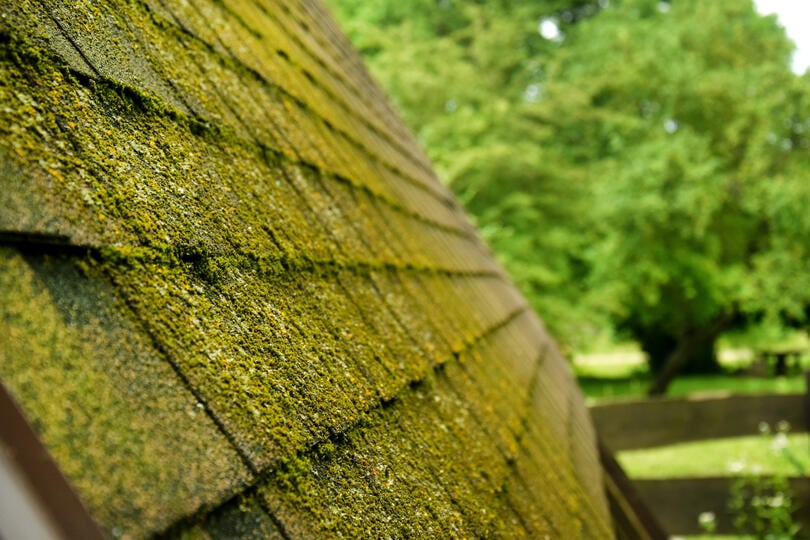
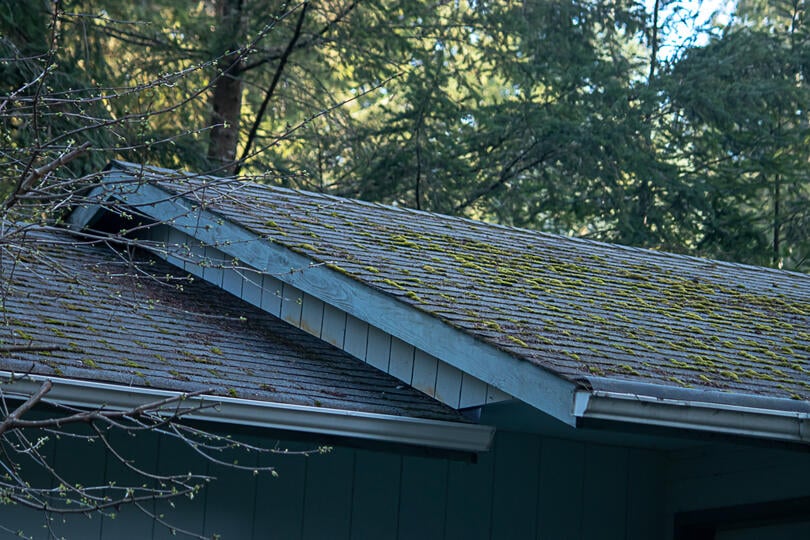
Moss needs three things to take hold: consistent moisture, limited sunlight, and a surface that holds organic debris. Roofs in Maryland and Northern Virginia deliver all three. The DC metro corridor stays humid through most of the year, and neighborhoods throughout Frederick, Bethesda, and Arlington are heavily canopied with oaks and maples that block sunlight and drop debris into roof valleys and ridges long after rain stops. North-facing slopes are almost always the first to show growth because they dry out the slowest.
What Moss Is Actually Doing to Your Shingles
Moss damage is mostly invisible until it is significant. The root-like structures moss uses to anchor itself, called rhizoids, embed into the shingle’s granule layer and physically lift the shingle edges. A lifted edge is no longer sealed against rain and wind. At the same time, moss holds moisture against the shingle surface long after surrounding areas have dried, degrading the asphalt binder and shortening a 25-year shingle’s lifespan to 15 or fewer. The most visible sign is granule loss. If you are finding heavy dark granule deposits in your gutters after rain, the shingle surface is actively breaking down.
When Moss Means Your Shingles Are Already Failing
On a roof that is 15 or more years old, moss is often a symptom rather than a cause. A healthy, well-granulated shingle sheds water efficiently and gives moss little to anchor to. When moss appears across multiple areas of an older roof, the removal conversation should become a roof condition conversation. Cleaning the surface on a 20-year-old roof with granule loss and lifting shingles is a cosmetic fix. The underlying water management problems remain.
If your roof is approaching replacement age and you are in the Frederick, Bethesda, Germantown, or Arlington area, a free inspection is the right first step before spending anything on cleaning.
8 Ways To Get Rid Of Moss On Your Roof
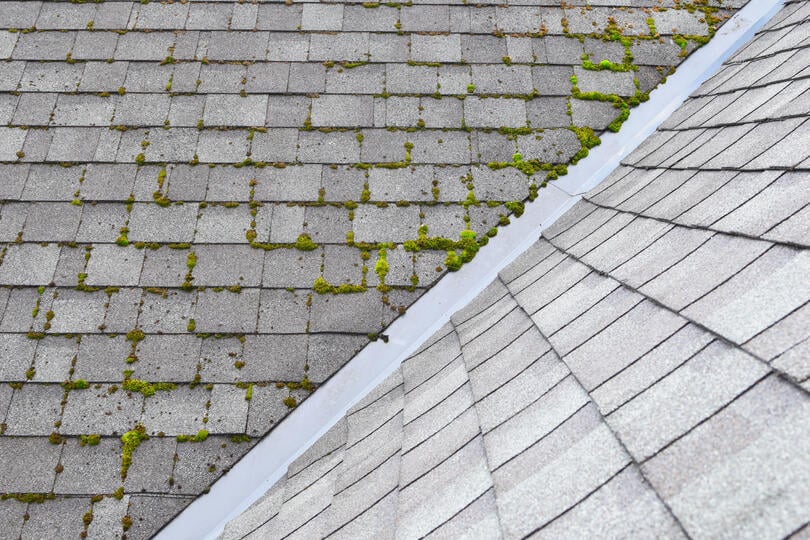
There is no shortage of approaches to roof moss removal, but they are not all equal. Some work well when applied correctly. Others are widely recommended online and genuinely harmful to your shingles or your yard. Here is an honest breakdown of all eight, including what each one does well and where it falls short.
1. Manual Scrubbing
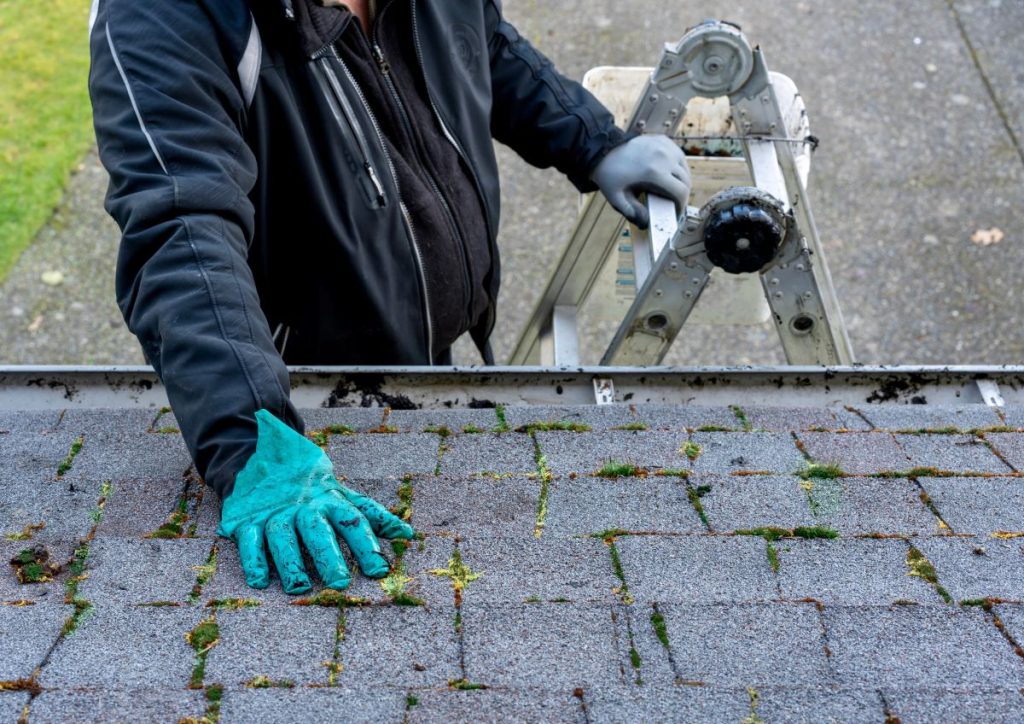
Using a soft-bristle brush to scrub moss off shingles is the most controlled removal method available to homeowners. Work from the ridge downward to avoid forcing debris under shingle edges. Use only soft-bristle brushes. Wire brushes and stiff-bristle tools strip granules and score the shingle surface. This method works well on light to moderate growth but requires working on the roof surface, which carries a real fall risk on any slope, particularly when moss is present. Wet moss on shingles is extremely slippery.
2. Homemade Cleaning Solutions
A diluted mixture of water and white vinegar or water and dish soap applied with a pump sprayer can loosen light moss growth before brushing. These solutions are low-risk for surrounding plants and shingle surfaces. They work best as a follow-up to mechanical removal on light growth and are not effective as a standalone treatment on established colonies. Apply on a dry day, allow to dwell for 20 to 30 minutes, then scrub gently and rinse with low-pressure water.
3. Commercial Moss Removers
Purpose-formulated moss removal products are available at most home improvement stores and are the most practical over-the-counter option. Look for products labeled safe for asphalt shingles and follow manufacturer instructions on dilution and dwell time. Many require no scrubbing. The product is applied, the moss dies over several weeks, and rain washes the residue away. This is a safer choice than bleach for homeowners with plantings near the foundation.
4. Bleach Solution
A diluted bleach and water solution kills moss effectively and works faster than most commercial alternatives. The significant drawback is runoff. Bleach draining through gutters and downspouts at the concentrations needed to kill established moss will damage or kill grass, garden plants, and landscaping at the discharge point. If you use bleach, wet down surrounding plantings before application and rinse thoroughly afterward. Never apply at full concentration. A 50/50 mix is the upper limit for shingle safety.
5. Zinc Sulfate Treatment
Zinc sulfate is one of the most effective moss-killing compounds available and is the active ingredient in many commercial products. It can also be applied as a standalone powder or solution. As it washes down the roof with rain, it inhibits regrowth across the full surface below the application point. It is less harmful to surrounding plants than bleach when used at appropriate concentrations. On heavily affected roofs in the mid-Atlantic, zinc sulfate is one of the more reliable DIY treatment options.
6. Pressure Washing
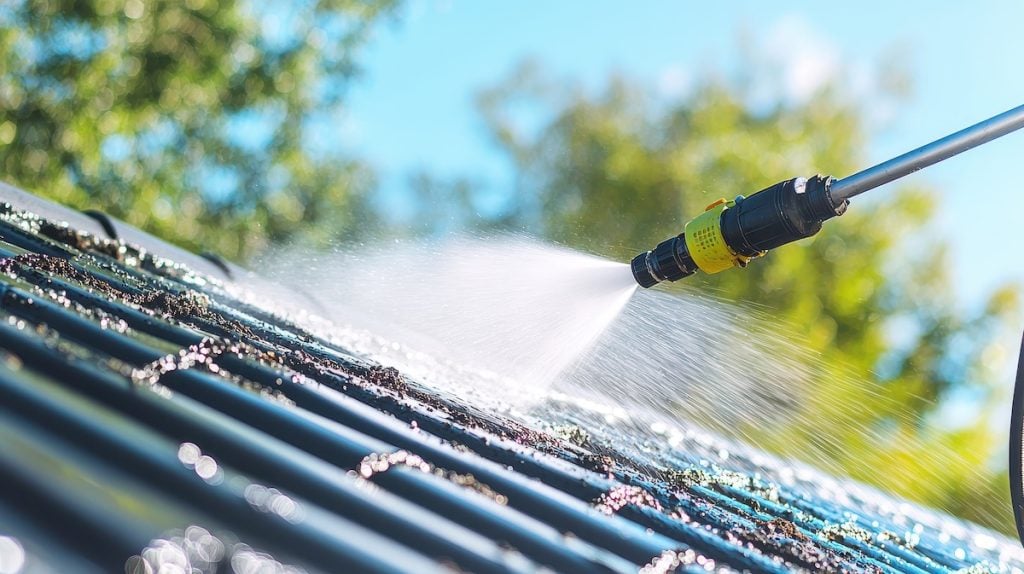
Pressure washing removes moss quickly and visibly but is the approach most likely to void your shingle warranty and cause direct damage. Owens Corning and most other major manufacturers explicitly exclude pressure washing damage from their warranty terms. The water pressure required to dislodge established moss is also sufficient to strip granules, crack shingle surfaces, and force water under shingle courses. If you use a pressure washer, keep the setting below 1,200 PSI and maintain at least 12 inches of distance. Low-pressure soft washing is a different process and does not carry the same risks.
7. Copper and Zinc Strips
Installing copper or zinc strips along the ridge line is the most effective passive treatment available. As rainwater washes over the metal, it picks up ions that are toxic to moss, algae, and lichen, and that treated water runs down the full slope below. Copper performs better but costs significantly more. Zinc is the practical choice for most residential applications. Strips should run the full ridge length for complete coverage. This is a prevention measure rather than an active removal method, but applied after a cleaning it dramatically extends the time before regrowth.
8. Professional Soft Wash Treatment
Professional roof moss removal uses a low-pressure chemical application, sometimes called a soft wash, that kills moss at the root level without mechanical force against the shingles. Active ingredients are typically zinc sulfate, sodium hypochlorite at appropriate concentrations, or purpose-formulated biocide products labeled safe for asphalt shingles. The process does not require walking heavily across the roof surface, does not involve the pressure that strips granules, and does not produce the uncontrolled runoff that bleach creates. Dead moss dries and breaks away on its own over the following months, which is gentler on the shingle surface than aggressive manual removal. A professional application typically includes a ridge strip installation for ongoing protection.
Preventing Moss with a Local Lens
For homeowners in Maryland and Northern Virginia, preventing the need for repeat roof moss removal means accounting for the specific conditions that make this region so hospitable to it. General prevention advice that does not address tree canopy and local humidity is only partially useful here.
Zinc and Copper Strips
Installing zinc or copper strips along the ridge of the roof is the most effective passive prevention measure available. As rainwater washes over the metal, it picks up ions that are toxic to moss, algae, and lichen. That treated water runs down the slope and inhibits growth across the full surface beneath the strip. Copper is more effective but significantly more expensive. Zinc is the practical choice for most residential applications. Strips should run the full length of the ridge for complete coverage. On complex rooflines with multiple ridges and hips, additional strip placement on secondary ridges improves coverage.
Trimming Oaks and Maples
In neighborhoods throughout Frederick, Bethesda, Germantown, and Arlington, mature oaks and maples are both a defining characteristic and a consistent roof problem. Overhanging branches deposit debris directly onto the roof, block sunlight for extended periods, and drip water onto the surface long after rain has stopped. Trimming branches to create a minimum clearance of three to four feet above the roof surface reduces debris accumulation and improves drying time after rain events. Complete removal is rarely necessary. Selective pruning to open the canopy above north-facing slopes makes a measurable difference.
Attic Ventilation
A poorly ventilated attic keeps the roof deck warmer in summer and contributes to moisture retention in the sheathing below the shingles. That chronic moisture condition creates a roof environment that is more hospitable to biological growth of all kinds and accelerates the degradation that makes established moss growth worse. Ensuring your attic has adequate soffit and ridge ventilation is a structural improvement that benefits the full roof system, not just moss prevention.
Frequently Asked Questions
Is moss actually dangerous for my roof?
Yes, though it works slowly. Moss lifts shingle edges through its rhizoid structures, holds moisture against the shingle surface for extended periods, and strips granules during any removal attempt. On a roof that is already aging, those three effects compound existing vulnerabilities. The damage is most significant on roofs that are 15 or more years old where the shingle surface has already lost some granule coverage.
Can I use bleach to remove moss from my roof?
Bleach kills moss but creates problems that are often worse than the moss itself. Runoff from bleach applications travels through gutters and downspouts at concentrations that kill grass and plants at the foundation. Bleach also has no residual effect and does nothing to prevent recolonization. Professional soft wash products are formulated to be effective against moss without the uncontrolled runoff problem that bleach creates.
Does pressure washing damage shingles?
Yes. High-pressure water strips granules, cracks shingle surfaces, and forces water under shingle courses. Most major shingle manufacturers including Owens Corning exclude pressure washing damage from their warranty coverage. Low-pressure soft washing is a different process entirely and does not carry the same risks.
How do I know if my moss problem is a symptom of a failing roof?
If your roof is 15 or more years old, moss is appearing in multiple locations including areas that previously stayed clean, and you are finding heavy granule deposits in your gutters, schedule a professional inspection before spending money on cleaning. On a roof approaching the end of its lifespan, moss removal is a cosmetic fix that does not address the underlying condition. A professional can tell you whether the shingle surface is viable for another several years or whether replacement is the more practical answer.
How long does professional moss treatment last?
A properly applied soft wash treatment with follow-up ridge strip installation typically keeps a roof moss-free for three to five years in the mid-Atlantic climate. Without the strips, recolonization can begin within one to two growing seasons because the conditions that supported the original growth are still present.
Schedule Your Roof Moss Removal Inspection
Roof moss removal in Maryland and Northern Virginia is not a one-size-fits-all project. The right approach depends on the age of your roof, the extent of the growth, and whether the shingles beneath it are viable for another decade or already declining. Getting that answer before spending money on cleaning is the most practical first step.
ARCH Exteriors provides free roof inspections for homeowners across the Frederick, Bethesda, Germantown, and Arlington areas. We look at the full roof condition, not just the surface growth, and give you a straight answer on what your roof actually needs. Contact us today to schedule your free inspection.


