


Gutters Buying Guide: What Every Homeowner Should Know
 13 minutes
 May 21, 2021
 Gutters play a critical role in protecting your home by channeling rainwater away from the foundation. Without them, you risk serious issues like basement flooding, soil erosion, mold growth, and even structural damage. But with so many gutter sizes, styles, and materials available, choosing the right system can feel overwhelming, especially if you’re not sure what to look for.
That’s why ARCH Exteriors, LLC, a trusted local expert in gutter installation and replacement windows, put together this simple, no-fluff buying guide. You’ll learn what type of gutters best suit your home, how to compare materials, and what to consider before installation so you can make a confident, informed decision.
Key Takeaways
- Gutters protect your home by channeling rainwater away from the foundation, preventing erosion and flooding.
- There’s no one-size-fits-all solution. Gutter systems come in various materials, sizes, and styles.
- Choosing the right gutters involves considering your home’s size, climate, budget, and aesthetic preferences.
- Professional installation matters for long-term performance and warranty protection.
- This guide will help you compare gutter types, understand costs, and avoid common mistakes when buying house gutters.

Why House Gutters Matter
House gutters might seem like a small detail, but they play a big role in protecting your home’s structure and landscaping. Their main job is to channel rainwater off your roof and direct it safely away from your home’s foundation. Without a proper gutter system, water can pool around the base of your home, eventually leading to costly problems such as:
- Foundation cracks
- Basement flooding
- Soil erosion
- Rotting fascia or siding
- Stained or damaged masonry
Over time, even moderate water damage can compromise your home’s structural integrity and result in repairs that cost far more than installing quality gutters in the first place.
A well-designed gutter system does more than prevent damage. It also:
- Helps preserve your home’s exterior finish and paint
- Prevents mold and mildew buildup around your foundation
- Reduces the risk of ice dams in colder climates
- Improves drainage and yard health by preventing over-saturation
In short, house gutters are a crucial first line of defense in your home’s weather protection system. Choosing the right type, size, and material isn’t just about curb appeal; it’s a long-term investment in the safety and durability of your property.
Choosing the Right Gutter Material
Before you start shopping for house gutters, it’s essential to understand which material best fits your home’s needs, climate, and budget. Each gutter material offers unique benefits in terms of durability, appearance, cost, and maintenance, so making the right choice upfront can save you time and money down the line.
| Material | Durability | Maintenance | Best For | Key Features |
|---|---|---|---|---|
| Vinyl | Moderate (10–15 years) | Low | Homes in mild climates | Inexpensive, rust-proof, easy for DIY installs |
| Aluminum | High (20–30 years) | Low to Moderate | Most residential homes | Lightweight, corrosion-resistant, available in seamless options |
| Galvanized Steel | Very High (15–25 years) | Moderate | Areas with heavy rain/snow | Extra strength, handles large volumes of water |
| Copper | Exceptional (50+ years) | Very Low | Historic or high-end homes | Aesthetic appeal, patinas over time, no rust/corrosion |
Best Gutter Materials for Maryland Homes and Climate
Maryland experiences a wide range of weather conditions, from humid summers and salt air near the coast to freezing winters and heavy rainfall. Choosing the right gutter material ensures your home stays protected year-round. Below is a breakdown of the best gutter materials for Maryland homes, organized by performance and climate compatibility.
Vinyl – Budget-Friendly but Not Ideal for Maryland’s Winters
Vinyl gutters are lightweight, inexpensive, and easy to install, which makes them attractive for budget-conscious homeowners or DIY projects. However, they don’t perform well in extreme heat or freezing temperatures. In Maryland, where hot summers and cold winters are the norm, vinyl is prone to warping and cracking.
- Best For: Mild weather zones, short-term solutions, sheds or garages
- Climate Watchouts: Not suitable for regions with frequent freeze-thaw cycles (common throughout Maryland)
Aluminum – The Best Overall Gutter Material for Maryland Homes
Aluminum gutters are the go-to choice for most Maryland homeowners. They’re rust-resistant, affordable, and available in seamless styles that reduce leaks. They handle humidity, coastal moisture, and seasonal temperature swings exceptionally well.
- Best For: Suburban homes, coastal areas, and regions with heavy rainfall
- Climate Benefits: Corrosion-resistant, lightweight, and adaptable to both heat and cold
Galvanized Steel – Strong for Snowy Areas, but Needs Upkeep
Galvanized steel is ideal for parts of western Maryland, where snow, wind, and ice are more common. These gutters are strong and resistant to denting, but will rust over time if not properly maintained. They’re best for homeowners who can commit to regular inspections and sealing.
- Best For: Homes in mountainous or snow-prone areas like Garrett or Washington County
- Climate Benefits: Durable under snow loads and harsh weather
- Maintenance Tip: Apply protective coatings to prevent rust buildup from wet seasons
Copper – Long-Lasting & Ideal for Coastal or Historic Homes
Copper gutters offer unmatched longevity and visual appeal. They’re naturally resistant to salt air, humidity, and corrosion, which makes them a perfect fit for coastal Maryland homes or historic districts. While the upfront cost is higher, the investment pays off over decades.
- Best For: Historic homes, premium builds, coastal properties
- Climate Benefits: Low-maintenance, doesn’t rust, and thrives in humid/salty environments
Gutter Styles: Which Type Is Right for Your Home?
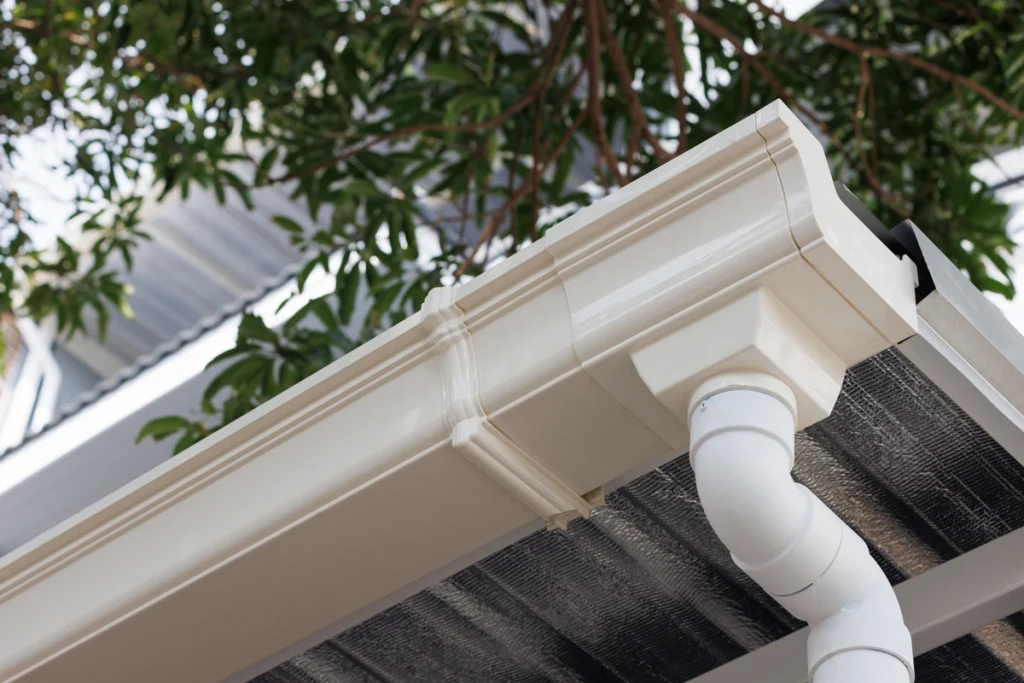
After selecting the best material, the next step is choosing the right gutter style, one that fits both the look of your home and how much rainwater your system needs to manage. The most common gutter styles for residential properties are K-style and half-round, but there are also specialty options like box and fascia gutters worth knowing about.
K-Style Gutters
K-style gutters are the most popular option for modern homes. They feature a flat back and bottom with a decorative front edge that mimics crown molding, giving your roofline a polished, finished look.
Why homeowners choose them:
- Hold more water than half-round gutters of the same width
- Compatible with seamless installation (fewer leaks)
- Cost-effective and widely available in different materials
Things to consider:
K-style gutters can be harder to clean because of their angled design, which may trap debris more easily than smooth-rounded profiles.
Half-Round Gutters
Half-round gutters are shaped like a semi-circle and typically found on older or historic homes, where their classic profile complements traditional architecture.
Why homeowners choose them:
- Smooth interior allows water and debris to flow more freely
- Easier to clean than K-style gutters
- Often paired with copper or aluminum for a timeless aesthetic
Things to consider:
They carry less water than K-style gutters of the same width and may require special brackets for installation.
Box Gutters (Specialty Option)
Box gutters are built into the roof structure itself and are most commonly used on commercial buildings or large custom homes. They feature a high-capacity, squared-off profile that’s excellent for managing large volumes of water.
Why they’re used:
- Ideal for flat or low-slope roofs
- Can handle heavy rainfall
- Often part of high-end architectural designs
Things to consider:
Box gutters are more expensive to install and maintain, and they typically require professional fabrication and waterproofing.
Fascia Gutters (Modern Design Option)
Fascia gutters are custom-built systems that serve as both the fascia board and the gutter. They are commonly found on contemporary homes that don’t have traditional fascia boards.
Why homeowners choose them:
- Sleek, minimalist look
- Built to match modern rooflines
- Can be fabricated for seamless, integrated design
Things to consider:
These are custom-only solutions that require professional installation, and they can be more expensive than standard styles.
Sectional vs. Seamless Gutters
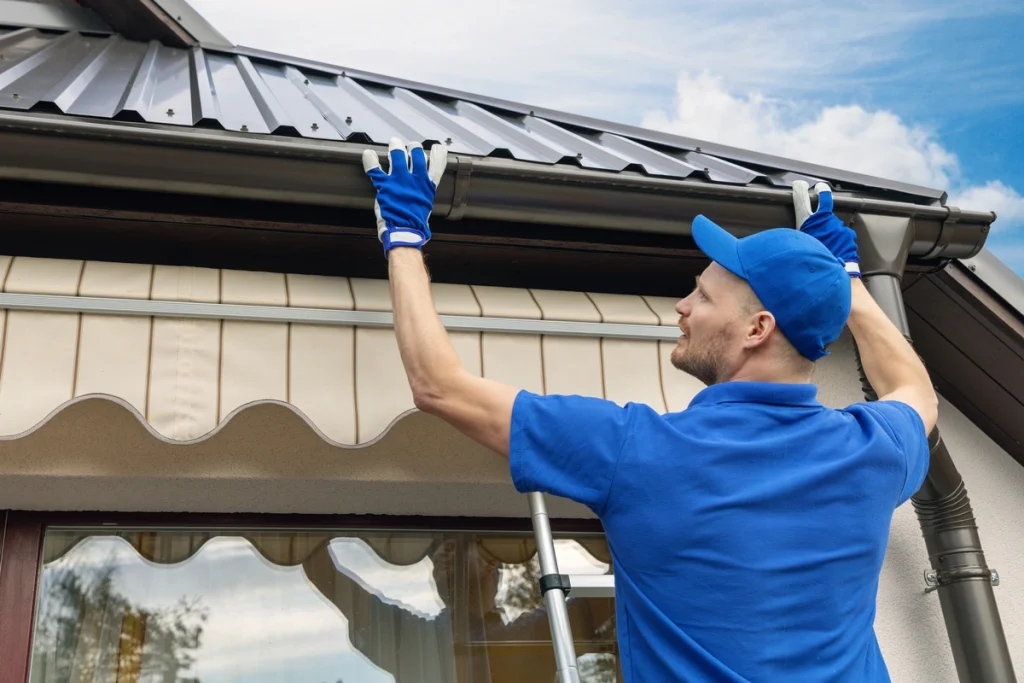
One of the most important decisions you’ll make when choosing gutters is whether to go with seamless or sectional systems. Both options serve the same purpose, channeling rainwater safely away from your home, but they differ in how they’re built, installed, and maintained.
Sectional Gutters
Sectional gutters come in pre-cut lengths (usually 10 feet long) and are joined together at seams during installation. You can find them at most home improvement stores, making them a popular choice for DIYers or budget-conscious homeowners.
Pros:
- Lower upfront cost
- Easy to install as a DIY project
- Readily available in home stores
Cons:
- Seams at every joint increase the risk of leaks and clogs over time
- Less visually appealing due to visible joints
- Requires regular maintenance to prevent separation or rust at the seams
Best For:
Small homes, DIY projects, or temporary solutions
Seamless Gutters
Seamless gutters are custom-fabricated on-site using a continuous roll of material, cut to the exact dimensions of your home. With no seams along the run (only at corners and downspouts), they offer superior durability and performance.
Pros:
- Fewer seams = fewer leaks
- Cleaner, more modern appearance
- Custom fit reduces installation errors and improves performance
- Lower maintenance over time
Cons:
- Higher upfront cost
- Requires professional installation and special equipment
Best For:
Long-term homeowners, larger homes, or anyone looking for a clean, low-maintenance solution
What Size Gutters Do You Need?
When it comes to house gutters, size matters more than most homeowners realize. Choosing the correct gutter and downspout size ensures your system can handle the volume of water coming off your roof, especially during heavy storms.
The ideal gutter size for your home depends on several factors:
- Roof size and pitch
- Rainfall intensity in your area
- The number and placement of downspouts
Common Residential Gutter Sizes
- 5-inch K-style gutters
The most common size used on standard residential homes. They offer enough capacity for average roof sizes in regions with moderate rainfall. - 6-inch K-style gutters
Recommended for larger homes, steeply pitched roofs, or areas with heavy rainfall. These gutters can handle more water and reduce the risk of overflow.
Are Gutter Guards Worth It?
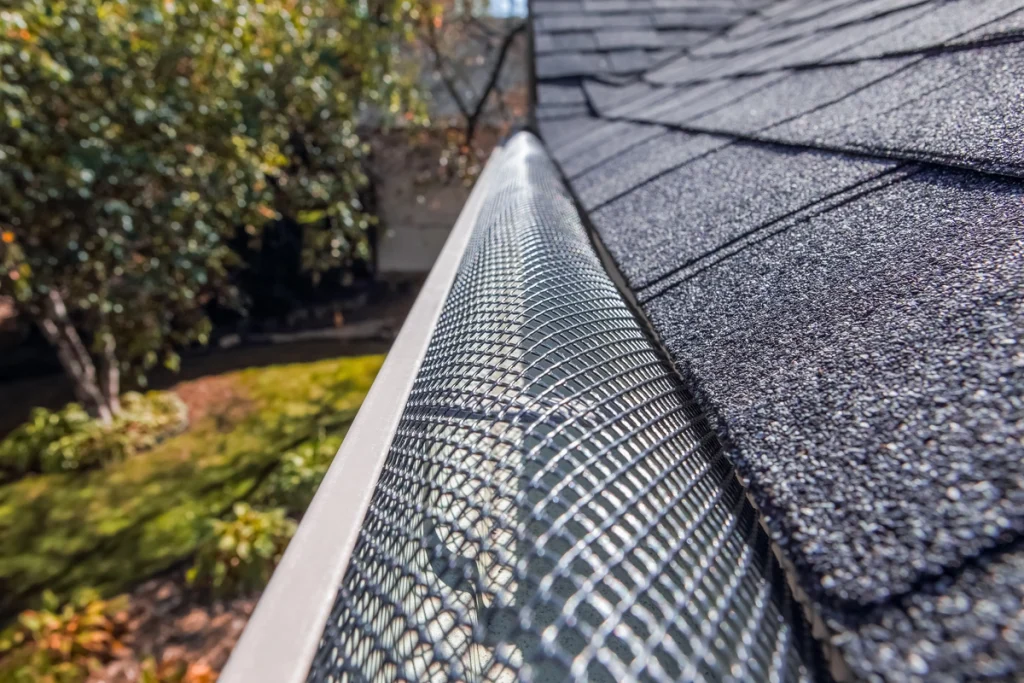
Gutter guards are protective covers that sit on top of your gutters to help block leaves, twigs, and other debris from entering the system. While they’re not mandatory, they can dramatically reduce maintenance and extend the life of your gutters, especially in homes surrounded by trees.
Benefits of Gutter Guards
- Reduce clogs caused by leaves, pine needles, and roof grit
- Minimize cleaning frequency, especially during the fall
- Prevent standing water, which helps reduce rust and corrosion
- Reduce the risk of overflow that could damage fascia, siding, or foundations
Potential Drawbacks
- Higher upfront cost depending on the type and gutter length
- Not completely maintenance-free, some debris may still collect on top
- Not all types work in every climate or roof type (e.g., snow, steep roofs)
Types of Gutter Guards
| Type | Pros | Cons |
|---|---|---|
| Mesh Screens | Excellent filtration, easy to install | Can clog on top if not cleaned occasionally |
| Foam Inserts | Affordable and DIY-friendly | Can trap fine debris and degrade over time |
| Reverse Curve | Channels water in, debris slides off | Higher cost, may be visible from the ground |
Average Gutter Lifespan & When to Replace Them
Even the most durable gutter system won’t last forever. Over time, exposure to the elements, seasonal debris, and wear from heavy rainfall can cause gutters to break down. Knowing when to replace your gutters can help you avoid water damage, structural issues, and costly repairs.
Signs You Need to Replace Your Gutters
If you notice any of the following issues, it may be time to consider a replacement:
- Visible rust, holes, or cracks
- Gutters pulling away from the roofline or sagging
- Water pooling near your foundation or landscaping
- Overflowing gutters, even after they’ve been cleaned
- Peeling paint or water stains on siding or fascia boards
These are all signs that your current system is no longer working efficiently.
DIY vs. Professional Gutter Installation
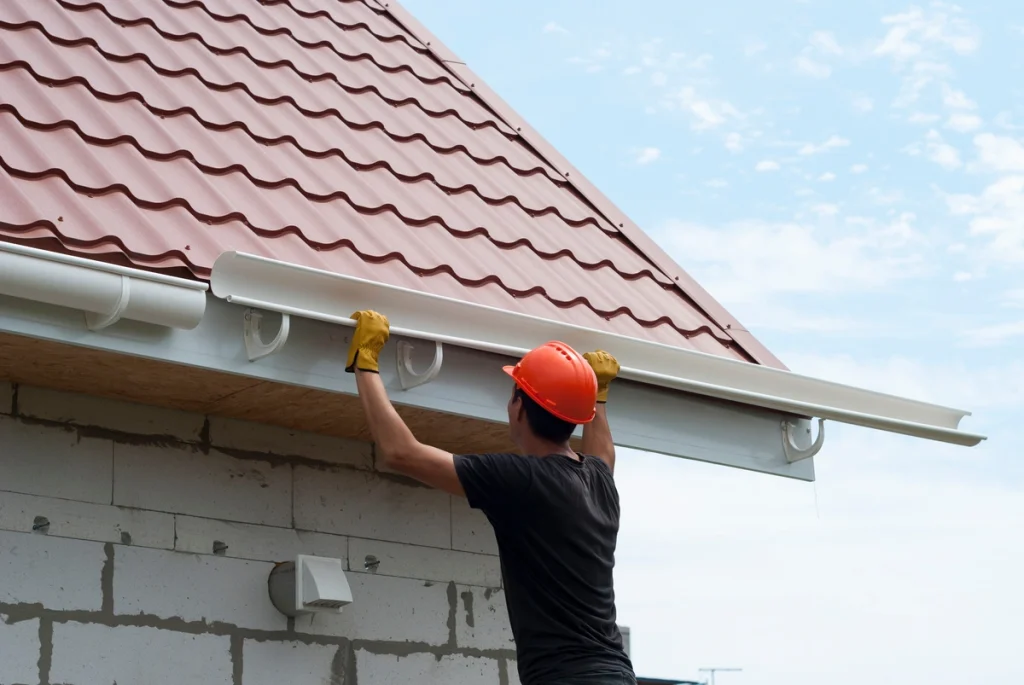
Installing house gutters might seem like a manageable weekend project, but it’s more complex than simply attaching metal under the eaves. The choice between DIY and professional gutter installation depends on your comfort level, tools, and the type of gutter system you choose.
DIY Gutter Installation
Doing it yourself can save on labor costs, especially for small, one-story homes. However, it comes with risks and limitations.
Pros:
- Lower upfront cost
- Suitable for sectional gutters and smaller homes
- Flexible timeline if you’re comfortable with tools
Cons:
- Requires ladders, cutting tools, sealant, and accurate pitch alignment
- Increased risk of leaks or drainage issues if installed incorrectly
- Typically, there is no warranty on workmanship
Professional Gutter Installation
Hiring a licensed contractor ensures proper slope, secure attachment, and high-performance results, especially for seamless gutters, which require specialized equipment.
Pros:
- Custom-fit seamless gutters available
- Faster, safer, and more accurate installation
- Warranties on materials and labor for peace of mind
Cons:
- Must schedule with a contractor (less flexible timeline)
- Higher initial cost
For most homeowners, especially those with multi-story homes or complex rooflines, professional installation is the safer and more reliable option.
Get Expert Gutter and Roofing Services You Can Trust
Looking for reliable gutter or roof replacement services? Turn to ARCH Exteriors, LLC, your trusted local experts for high-quality exterior upgrades. In addition to gutter installation, we offer affordable replacement windows and doors designed to boost your home’s comfort and energy efficiency.
We also install affordable replacement windows and doors to provide the comfort and efficiency you need in your living space. Call us today at (301) 215-2343 or fill out our contact form to request a free, no-obligation estimate.
FAQs
What happens to a house with no gutters?
Without gutters, rainwater runs directly off your roof and falls close to your home’s foundation. Over time, this can lead to soil erosion, foundation cracks, basement flooding, and damage to siding or landscaping. Homes without gutters are also more vulnerable to mold, mildew, and wood rot around fascia boards. Gutters are essential for directing water safely away from your property and preventing costly damage.
How often should gutters be cleaned?
You should clean your gutters at least twice a year, once in the spring and again in the fall. If your home is surrounded by trees or is in a storm-prone area, consider cleaning them more frequently or installing gutter guards to reduce debris buildup.
What size gutters are best for most homes?
For most residential homes, 5-inch K-style gutters are the standard choice and are suitable for average roof sizes and typical rainfall levels. However, if your home has a larger or steeper roof, or if you live in an area with heavy rainfall, upgrading to 6-inch gutters is a smart choice. Larger gutters and downspouts can handle higher water volume, reducing the risk of overflow and potential damage during storms.
How long do house gutters typically last?
The lifespan of house gutters depends on the material used and how well they’re maintained. Vinyl gutters generally last between 10 and 15 years, while aluminum gutters can last 20 to 30 years with proper care. Steel gutters are more durable and last around 15 to 20 years, though they may be prone to rust if not maintained. Copper gutters are the longest-lasting option, with lifespans of 50 years or more. Regular inspections and cleaning will help any gutter system last longer.


